You are here: Home Traveller health Travel advice Malaria Travellers guide to malaria in South Africa
Traveller health Travel advice Malaria Travellers guide to malaria in South Africa Traveller health Travel advice Malaria Travellers guide to malaria in South Africa
 Is there Malaria in South Africa?
Yes
Malaria is endemic in certain areas of South Africa
Through good malaria control efforts, the disease is now restricted to certain districts in three provinces; namely the north-eastern KwaZulu-Natal, parts of Mpumulanga and Limpopo. These areas have conditions that are suitable for malaria transmission.
Malaria occurs mainly in low altitude areas but occasionally has been found in high altitude areas within these provinces. On rare occasions malaria is contracted near the Molopo river in the North-West Province and Orange River in the Northern Cape Province (Department of Health, 2009)
It is a seasonal disease. Low transmission periods are between May and September.
Yes.
However, not all mosquitoes carry the malaria parasite.
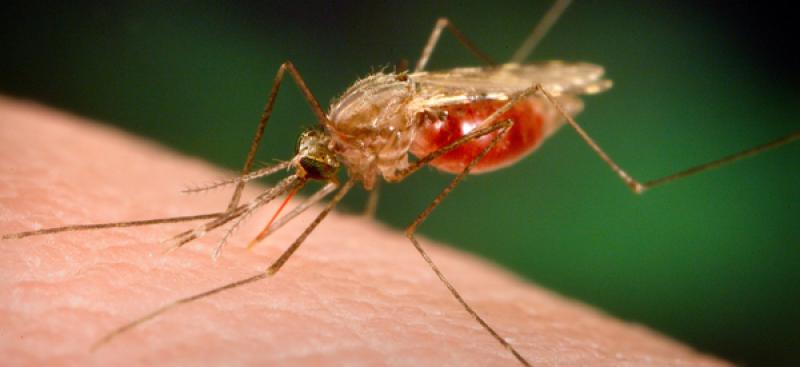
The mosquitoes which do carry the malaria parasite belong to the anopheles group. The mosquitoes which carry the parasites in malaria endemic areas generally bite between dusk and dawn.
Malaria risk is not evenly distributed within South Africa.The risk of being bitten with an infected mosquito depends on the time of year you are travelling, where you are travelling to, if you will be in the area between dusk and dawn, and if you are in a high risk group (refer to Table 1). Table 1 provides information on the malaria risk in South Africa and the recommended precautions
Table 1: Summary of malaria risk periods and recommended precautions
| Type of Malaria Risk Area | Time of year | Recommendation |
| Low risk when malaria transmission is low | End of May to beginning of September – cold dry months | No chemoprophylaxis recommended.
Take precautions against mosquito bites. |
| Moderate risk when malaria transmission is higher | September to May – wet summer months. | Chemoprophylaxis and precautionary measures against mosquito bites are recommended for all travellers.
Recommended chemoprophylaxis includes mefloquine, doxycycline or atovaquone-proguanil High risk people should avoid malaria risk areas if at all possible. People at high risk are elderly people, babies and children under 5 years, pregnant women, splenectomised patients and immunocompromised people |
According to the World Health Organisation, the malaria situation in countries neighbouring South Africa is listed below (WHO, 2012).
Table 2: Malaria risk in countries neighbouring South Africa
| Country | Malaria risk and duration |
| Angola | Throughout the year in the whole country |
| Botswana | From November to May-June in the northern parts of the country: Boteti, Chobe, Ngamiland, Okavango, Tutume districts/ subdistricts |
| Malawi | Throughout the year in the whole country |
| Mozambique | Throughout the year in the whole country |
| Namibia | From November to June in the following regions: Ohangwena, Omaheke, Omusati, Oshana, Oshikoto and Otjozondjupa. Risk throughout the year exists along the Kunene river and in Caprivi and Kavango regions |
| Swaziland | Throughout the year in all low veld areas (mainly Big Bend, Mhlume, Simunye and Tshaneni) |
| Zambia | Throughout the year in the whole country, including Lusaka |
| Zimbabwe | From November through June in areas below 1200 m and throughout the year in the Zambezi valley. In Bulawayo and Harare, the risk is negligible |
These are some of the precautionary measures you can take to avoid being bitten by mosquitoes:
Chemoprophlyaxis are medicines which help to reduce the chances of getting ill with malaria. These medicines must be taken according to the instructions given by your local medical practitioner/pharmacist.
Malaria symptoms may only develop 10-14 days after an infective mosquito bite.
There are drugs to treat malaria and it must be treated as a medical emergency. A high index of suspicion must be practiced. High-level resistance precludes the use of chloroquine for falciparum malaria (Department of Health, 2009).
Malaria is a notifiable disease in South Africa. According to the South African Department of Health (2009), the current recommended treatment for uncomplicated malaria in South Africa (Department of Health, 2009) is as follows:
This is incorrect. Prophylactic drugs suppress parasite development, and therefore, even if not totally effective (due to partial drug resistance or non-compliance), symptoms tend to take longer to appear, may be less severe at first and development of complications is retarded. In the complete absence of drugs, parasites are able to multiply at phenomenal rates, and malaria can quickly progress, and lead to severe complications and death.
Cerebral malaria is not a new strain; it is a complication of untreated P. falciparum malaria. Early diagnosis and appropriate treatment should ensure that no one gets cerebral malaria.
Malaria can indeed be cured with the appropriate drugs. Due to drug resistance to certain drugs, it is important to use the recommended drugs for the specific area.
Also, because most common drugs only deal with the blood and not the liver stages of the disease, the two malaria species that have dormant liver stages (vivax and ovale) may relapse. If the parasite species is not identified correctly, or if there were two species present in the blood, of which one was missed, malaria can recur, sometimes many months later. However, once the species has been correctly identified, the liver stage can be successfully treated with primaquine.
The drugs that we have to prevent malaria are known as blood schizontocides, which means that they work on the parasite once it enters the red blood cells. This does not occur until 10-14 days after being bitten by an infected mosquito. If the drug is stopped before the parasites reach the blood cells, there will not be enough in the blood to kill the parasites and the prophylaxis will fail. It is therefore extremely important to continue taking prophylaxis for four weeks after leaving a malaria area. Atovaquone-proguanil is an exception in that it acts primarily on the tissue stage and therefore one needs only to continue the course for seven days after leaving the area"The drugs are worse than the disease"
Antimalarials, like any other drug, do have side effects in some people, and in varying degrees. However only 15-20% of people experience side effects, and these are usually tolerable, with severe adverse reactions being rare. Malaria is potentially fatal and causes severe illness and discomfort which could land you in hospital and out of action for weeks.
There are numerous different drugs and drug regimes available for the fast and effective treatment of malaria. The use of one chemoprophylactic, does not exclude the future use of another antimalarial should the need arise.
Although transmission decreases during the "off" season, infective mosquitoes may still be active in the off season, just in lower concentrations. One still needs to take protective measures aginst mosquito bites, but not necessarily chemoprophylaxis.
There is no scientific evidence that either will protect you against mosquito bites. Malaria is a potentially fatal disease that requires proper preventative measures to be implemented.
The female Anopheles mosquito is not known as 'the silent killer' for nothing. She does not buzz around your head at night, irritating you. You may not be aware of her presence at all. The reaction to her bite may also not be as pronounced as it is with other bloodsucking insects and you may be unaware of having been bitten.
This guide, updated in October 2013, has been prepared by the Malaria Research Programme, of the Medical Research Council in South Africa.
Disclaimer: The information is provided to inform you about the malaria situation in South Africa. We do not offer clinical advice in this guide and you should always consult your travel doctor for travel related medical advice specific to your needs. (Updated May 2010)
You are advised to visit your general practice surgery or a travel medicine clinic at least 6 weeks before you travel. However, it is never too late to seek advice.
If you have a medical condition, you are advised to discuss the suitability of the trip before you book.
Information on the use of the SaNTHNet website.

Copyright © 2017, The South African National Travel Health Network (SaNTHNet). All rights reserved. Design by shaja